The Basics
What is malaria?
According to the CDC, malaria is the disease caused by the parasite Plasmodium. The parasite is carried by the Anopheles mosquito in the mosquito's saliva, and is transferred to a host through the bite of of the mosquito (CDC, 2010).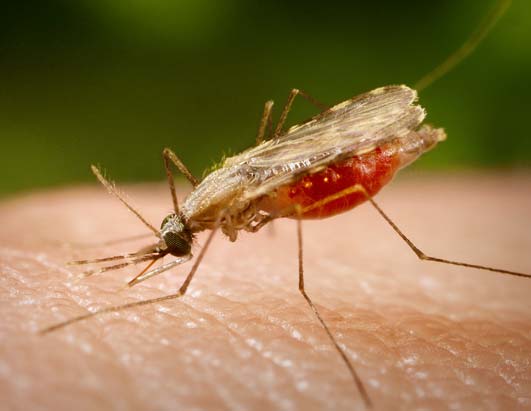 | FAST FACT: The Anopheles mosquito, seen in the picture to the left, is the only type of mosquito that carries and transmits the malaria parasite to humans. |
Where does malaria occur?
The occurrence of malaria depends on where the Anopheles mosquito is able to survive, breed, and transmit the Plasmodium parasite.
"At temperatures below 20°C (68°F), Plasmodium falciparum (which causes severe malaria) cannot complete its growth cycle in the Anopheles mosquito, and thus cannot be transmitted" (CDC, 2010).
What does this mean????
Malaria occurs in tropical and sub-tropical
areas of the world.
BUT:
Malaria will NOT occur, even in tropical and sub-tropical area, in:
1. High altitudes
2. During cold seasons (some areas)
3. In deserts (except for oases)
4. Areas with successful malaria control programs
(CDC, 2010b)
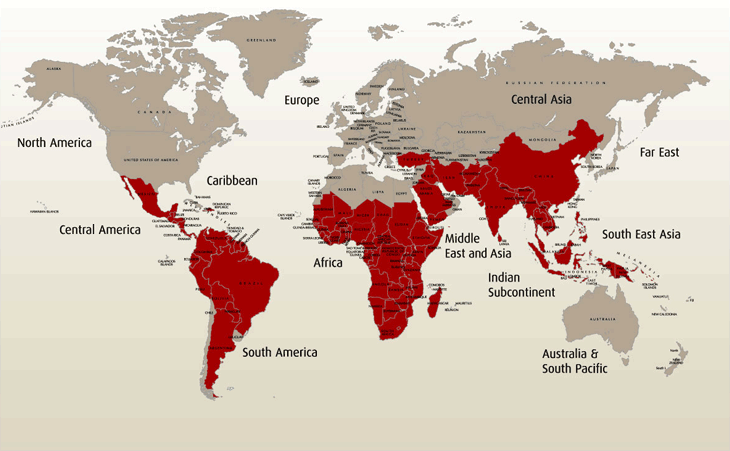
Typically, cooler regions will have less intense and more seasonal malaria transmission (CDC, 2010b). The map below shows the countries of the world where malaria occurs. Notice that malaria occurs in most of Central and South America, most of Southern Africa, and much of South East Asia.
 |
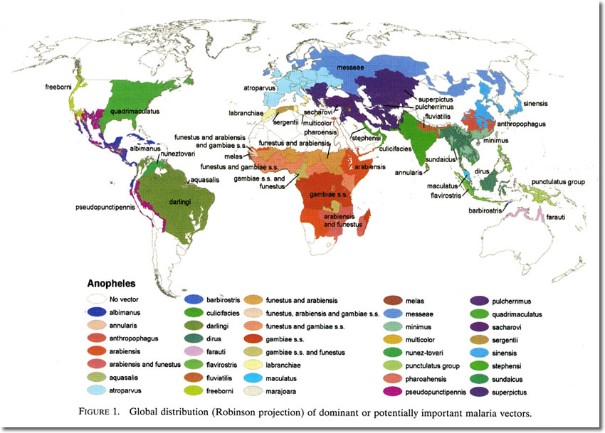
The map below shows the countries of the world where the Anopheles mosquito, the malaria vector, is found.
Much of the world's malaria occurs on the continent of Africa. The following are some facts about malaria in Africa:
- 90% of the world's malaria occurs in sub-Saharan Africa (Blumberg, 2005)
- At least 90% of malaria deaths occur in sub-Saharan Africa and primarily amongst young children (Blumberg, 2005)
- There is malaria in every country in Africa, except Lesotho, but some areas are more endemic than others (Blumberg, 2005)
- "Africa is the area of the world most threatened by malaria because it has the most efficient mosquito vectors, the Anopheles gambiae complex" (Miller, 1995).
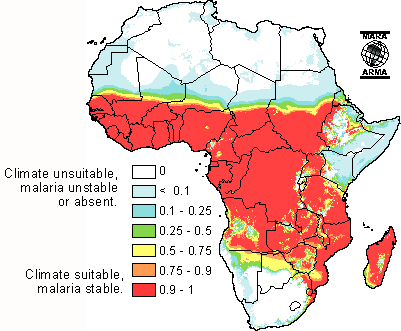
The map below shows where malaria occurs in Africa. Notice that much of malaria occurs in the central parts of Africa, whereas the northern countries of Africa, where the Sahara desert covers much of the land, has very little or no malaria.
 |
Organizations such as the Red Cross are working in Africa to combat malaria. Click HERE for a video about the Canadian Red Cross' work called Campaign Against Malaria in Africa.
Asia
How is malaria transmitted? Malaria is transmitted to humans by the female Anopheles mosquito, pictured at right. The female Anopheles mosquito must have blood to produce eggs (CDC, 2010c), and so the mosquito frequently bites blood hosts to find adequate blood supplies.
|
When the mosquito bites a host, if the mosquito is carrying the malaria parasite, it is transmitted in the saliva of the mosquito. The parasite can also be transmitted from an infected host, the infected human, to a female Anopheles mosquito (CDC, 2010c).
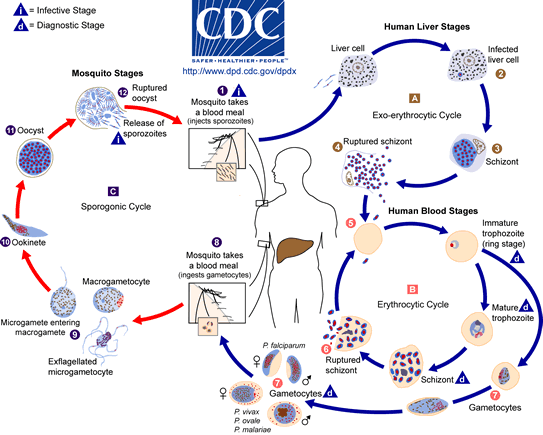
Once the malaria parasite is
in a human, it races through the blood stream to the liver where it
grows and multiplies in the liver cells. On
average, a non-immune human would be infected with about 100
sporozites (Plasmodium parasite), of which, 1-2 sporozites are able to travel to the liver and
invade a hepatocyte (Grobusch, 2005). | 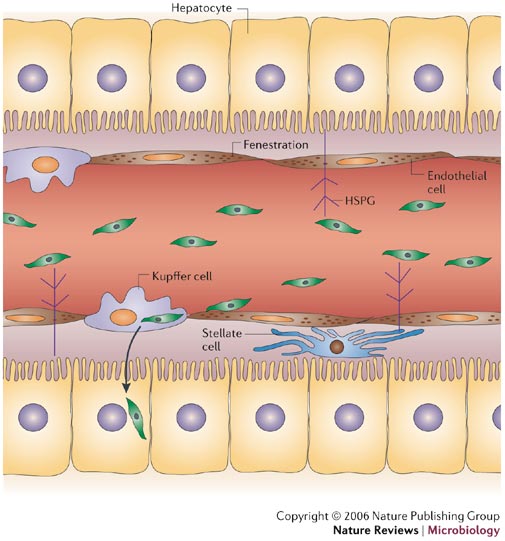 |
Once the parasite has multiplied enough that the liver cell bursts/lyses,
the parasite then moves out of the liver, and into the blood stream,
where it can find red blood cells/erythrocytes. Once in an erythrocyte,
the malaria parasite continues to grow and multiply (CDC, 2010c).
These are known as blood stage parasites. While in the erythrocyte, the parasite will ingest and degrade approximately 80% of the hemoglobin. The parasite also ingests the host cell's cytoplasm as it develops (CDC, 2010c).
The above video shows how malaria is transmitted.
As it develops, the parasite must rid the
cell of any remaining heme that is left over from its hemoglobin gorge.
This heme, or ferriprotoporphyrin IX is lethal to the parasite if not
properly disposed (Bray, 2005). The parasites in the red blood cells
will multiply about 100 fold every 2 days (Grobusch, 2005). |  |
A red blood cell will eventually burst from an overload of parasite, as well as waste products such as hemozoin pigment and other toxins (CDC, 2010d), and then release the merozites, or daughter parasties into the blood, where they invade other red blood cells and continue the cycle of infection (CDC, 2010c). The hemozoin pigment and other toxins like glucose phosphate isomerase are also dumped into the blood stream when the red blood cells bursts/lyses. These toxins activate the body's immune system macrophages, which then produce cytokines and other products, that then cause the human body's fever, and possibly other symptoms of malaria (CDC, 2010d).
Once the malaria parasites have migrated to the red blood cells in the
human blood, these gametocytes, can be picked up by an Anopheles
mosquito during a bite and blood meal. Inside the mosquito, also called the vector, the malaria
parasites continue to multiply, and will be ready to infect a human
after 10-18 days, when they are sporozites in the salivary glands of the
mosquito. These sporozites
will be injected into the human when the mosquito's saliva is also
injected. The cycle of infection will be repeated when the malaria
parasites reach the liver of the human (CDC, 2010c).
Fast Fact: The CDC also lists blood transfusions, mother to fetus transmission, needle sharing, and organ transplantation as modes of transmitting malaria (CDC, 2010e).
What are the symptoms of malaria?
The symptoms of malaria will not present in an infected individual until the parasites have burst from the liver and begun to invade the blood and the red blood cells (CDC, 2010d). These are known as blood stage parasites.
Once an individual is bitten by an infected Anopheles mosquito, the incubation period between the time of the bite and the onset of symptoms can vary from 7 to 30 days (CDC, 2010d). Plasmodium falciparum is typically associated with a shorter incubation period.
Blumberg also agrees
that malaria symptoms can present as early as seven days, but 10-21
days after being bitten is much more commonly seen in infected
individuals (Blumberg, 2005).
An infected individual can present malaria symptoms in a wide range of
severity, from no symptoms at all (asymptomatic) to extremely severe
symptoms, and also death. Malaria is typically labeled as either
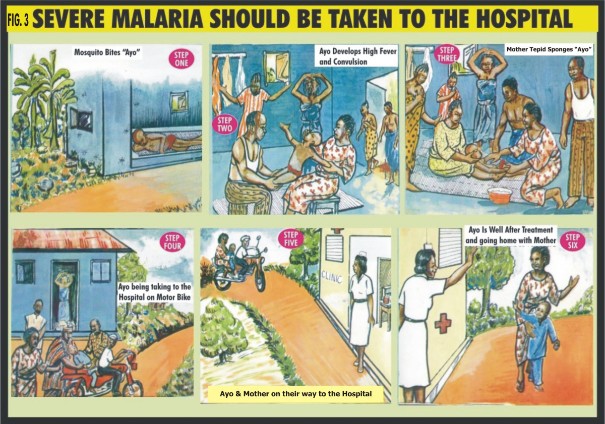
uncomplicated or complicated/severe malaria (CDC, 2010d). The World
Health Organization warns that, "if not treated, malaria can quickly
become life-threatening by disrupting the blood supply to vital organs"
(WHO, 2011).
According
to Blumberg, the symptoms of severe malaria include: impaired
consciousness, convulsions, respiratory distress, pulmonary edema,
jaundice, bleeding, and shock. Blumberg also notes that renal
impairment, acidosis, hepatic impairment, hypoglycemia, and hypoxia may
be evident in a patient afflicted with severe malaria (Blumberg 2005).
The CDC says that "in general, malaria is a curable
disease if diagnosed and treated promptly and correctly" (CDC, 2010d).
Uncomplicated Malaria
3 stages of malaria symptoms:- cold stage: shivering
- hot stage: fever, headaches, vomiting,
seizures (kids)
- sweating stage: normal temperature returns, tiredness
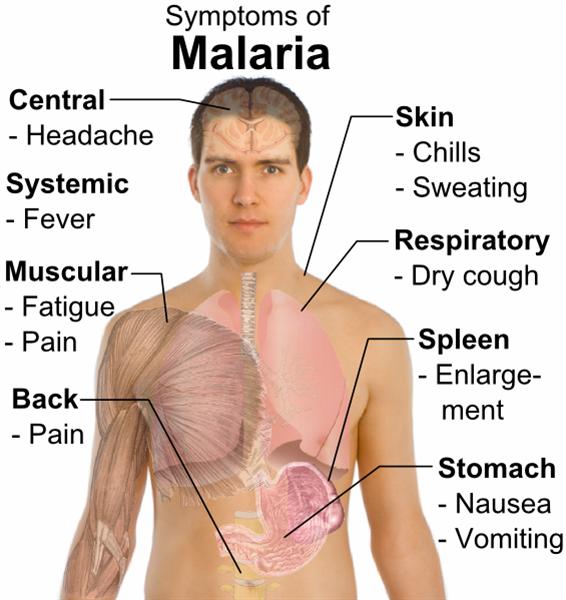
Instead of seeing these symptoms in this specified order, it is more common to see patients with a combination of these symptoms. Infected patients may also have an enlarged spleen, mild jaundice, an enlargement of the liver, and an increased respiratory rate (CDC, 2010d).
Fever is a common symptom of malaria, but it may be absent in some infected individuals. Blumberg also notes that diarrhea, vomiting, and coughing can also be symptoms of malaria (Blumberg, 2005).
Severe Malaria
According
to the CDC, "severe malaria occurs when infections are complicated by
serious organ failures or abnormalities in the patient's blood or
metabolism" (CDC,2010d). It is also almost exclusively caused by the Plasmodium falciparum parasite, and rarely by P. vivax or P. ovale (Trampuz, 2003).
In
areas of Africa where there there is a high endemic rate of malaria as
well as a stable transmission rate (Tanzania, Malawi, Mozambique),
severe malaria is more common in children under 5, and in pregnant
women. This is because adults and older children have acquired a
partial immunity to malaria because of repeated exposures. Areas
in Africa with low endemic rates have higher rates of severe malaria in
adults and older children because of their fewer exposures to the
disease (Blumberg, 2005).
Factors
that contribute to more severe cases of malaria include a delay in
diagnosis and adequate medications. The adherence of infected red blood
cells to blood vessel walls/endothelium can also compromise blood flow
in tissues, and can also contribute to cerebral malaria (see below)
(Blumberg, 2005).
Severe malaria in a patient may cause:
- cerebral malaria: abnormal behavior, seizures, coma
- severe anemia
- blood in the urine
- ARDS: Acute Respiratory Distress Syndrome
- impaired coagulation of the blood
- low blood pressure
- kidney failure
- hypoglycemia
- convulsions
- Respiratory Distress Acidosis
- jaundice
Acute renal failure, jaundice, and ARDS are more common complications seen in infected adults, while hypoglycemia, convulsions, and severe anemia are more common with children (Blumberg, 2005).
"Severe malaria occurs predominantly in patients with little or no background immunity - that is, children growing up in endemic areas, or travellers or migrants who come from areas without malaria, but are exposed to malaria later in life" (Newton, 2000).
Cerebral Malaria
It
is thought that cerebral malaria, an encephalopathy, is caused by Plasmodium
falciparum-infected red blood cells adhering to the walls of blood
vessel walls in the brain, and then not freely circulating in the
blood. Cerebral malaria is associated with a high mortality rate for
malarial infection (CDC, 2010d), and is associated with altered mental status and coma in affected patients, and is also more commonly seen in older children and adults (Newton, 2000).
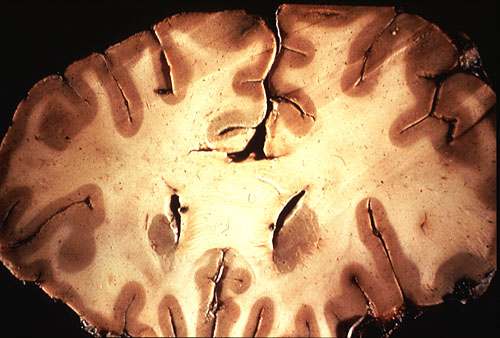
Above: a brain infected by cerebral malaria
Relapse
The malaria parasites Plasmodium vivax and Plasmodium ovale have dormant liver stages. Because of this dormant stage, infected patients may suffer a malaria relapse several months or years after the first attack and after the cessation of symptoms. There is a malarial treatment protocol that doctors can follow after the first malaria attack in order to reduce the chance of a malaria relapse (CDC, 2010d). Other Complications
1. Palsy, speech difficulty, deafness, blindness, and trouble moving/ataxia following severe malaria.
2. Severe anemia following reinfections of malaria.3. Premature delivery or low birth weight of the infant when malaria is contracted during the mother's pregnancy.
4. Rupturing of the spleen upon infection with Plasmodium vivax:
5. Nephrotic syndrome after reinfection with Plasmodium malariae.
6. Hyperreactive malarial splenomegaly, which is enlargement of the spleen and liver, anemia and susceptibility to skin or respiratory infections.
(CDC, 2010d)
The Mayo Clinic also notes that pulmonary edema, kidney or liver failure, and low blood sugar can also be complications of malaria.
What are the statistics of malaria?
"In 2008, malaria caused nearly one million deaths, mostly among African children."
"Malaria can decrease gross domestic product by as much as 1.3% in countries with high disease rates."
"In 2008, there were 247 million cases of malaria and nearly one million deaths – mostly among children living in Africa."
"In Africa a child dies every 45 seconds of Malaria, the disease accounts for 20% of all childhood deaths."
"The long lifespan and strong human-biting habit of the African vector species is the underlying reason why more than 85% of the world's malaria deaths are in Africa."
"In 2008, malaria was present in 108 countries and territories."
(WHO, 2011b)
"Malaria is the 5th cause of death from infectious diseases worldwide (after respiratory infections, HIV/AIDS, diarrheal diseases, and tuberculosis)."
"Malaria is the 2nd leading cause of death from infectious diseases in Africa, after HIV/AIDS."
(CDC, 2010a)
Is malaria still a threat in the United States?
According to the CDC, there are about 1,500 cases of malaria in the United States each year. Eradicated from the United States in the early 1950s, most of the cases diagnosed are found in travelers and immigrants from areas where malaria is found, such as in Africa and South Asia.
Even though malaria in the United States is typically found in travelers and immigrants, there have been outbreaks have been outbreaks of locally transmitted malaria in the United States since 1957. Between 1957 and 2009, there have been 63 outbreaks of malaria caused by local mosquitoes. These mosquitoes transmit the disease after biting people who are carrying the malaria parasite. The mosquitoes that transmit malaria, the Anopheles mosquitoes, are still found in the United States. So there is a constant threat of malaria reappearing in the U.S. as a problem because of the amount of travelers and immigrants that arrive in the United States from malaria-endemic areas.
(CDC, 2010e)
Fast Fact:
While carrying the malaria parasite Plasmodium, the mosquito
does not experience any malaria symptoms (CDC, 2010c).
"In recent years, some human cases of malaria have also occurred with Plasmodium knowlesi – a monkey malaria that occurs in certain forested areas of South-East Asia" (WHO, 2011b).
