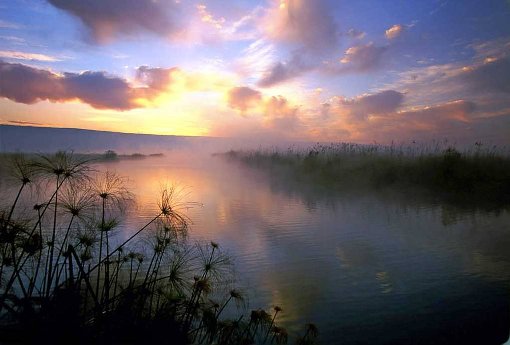
 | The Hula Valley |
Where is the Hula valley? The Hula valley (known as עמק החולה or Emek HaHula in Hebrew) is located in northern Israel, in the northern part of the Dead Sea Rift valley (Zohary, 2010). The Golan Heights lie to the east of the valley and the Naftali mountains of the Upper Galilee lie to the west. The area is a wetlands ecosystem, receiving about 22 inches of rain per year (Jordan River, 2011), with abundant fresh water in the area between the settlements Kiryat Shmona and Rosh Pinnah. At the turn of the century, the swamp and marshland of the valley was about 14,800 acres in size (Winter, 1999). | 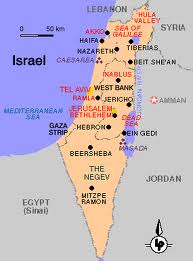 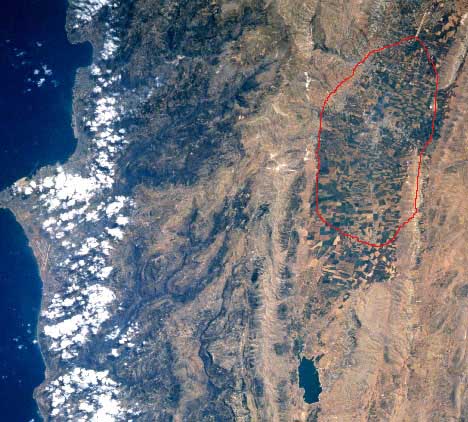 |
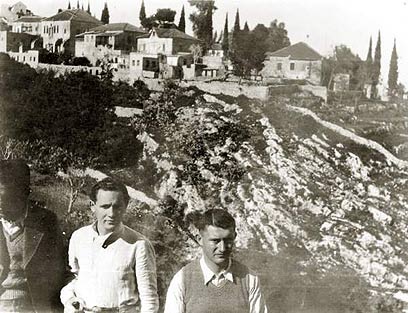 | Rosh Pinnah, March 1935 |
Click Here for a 3-D tour of modern-day Rosh Pinnah.
About 2/3 of the water in Lake Hula and the swamps of the valley come from the Jordan River. The waters begin on top of Mount Hermon in the North, then fill the underground springs. The Dan, Hazbani, and Banias rivers begin in the North, fed from these springs, and then converge to create the Jordan River (Zohary, 2010).
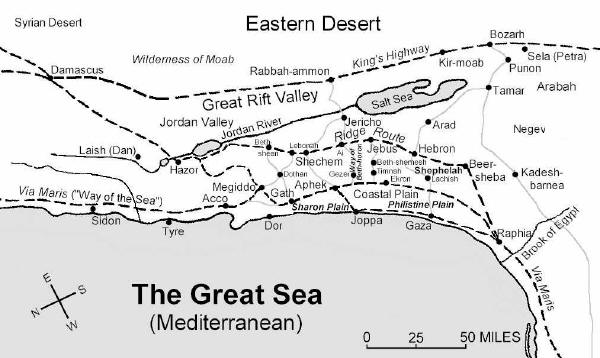
Settlements in the Hula Valley
Humans
have lived in the Hula Valley for thousands of years. Over the course of history, Lake Hula has been called by many names: Samchuna in Egyptian, Hulata in Aramaic, Beheirat el Huleh in Arabic, and Agam Hula in Hebrew. Flavius Josephus, the Jewish historian from the 1st century AD called the lake Semechonitis (Zohary, 2010). The Hula Valley lies at the intersection of trade routes that connect Damascus with the Mediterranean coast and Egypt. The Canaanites built their cities of Hazor and Layish (later the Israelite city of Dan) in the Hula Valley area during the Bronze Age (Zohary, 2010). The discovery of
an ancient synagogue in the Hula Valley proves that Jewish people have
been living in the Hula Valley for at least the last 1,700 years
(Aisenburg, 2008).
Since the time of the first settlements in the Hula Valley, farming has been a major source of provisions for survival. In order to effectively farm the land, the water from the lake and swamps had to be used carefully. In fact, "agriculture in the Hula Valley was
always dependent on the effective use and control of water resources.
Farming communities which mastered the use of irrigation endured, but
unsuitable irrigation methods led to the proliferation of mosquitoes and
malaria. It is uncertain when malaria first appeared in the Hula Valley,
and its extent and impact varied with irrigation and drainage practices" (Zohary, 2010). Once settlers arrived in the area, they not only had to find suitable land to farm so they could survive, but they also had to battle the ongoing threat of mosquitoes and the malaria-causing parasites that they carried.
Modern-day
Jewish settlers began arriving in the land of modern Israel and
settling in the Hula valley during the aliyahs of the late 19th and the
early 20th centuries. The draining of the swamp became a high priority
of the settlers because of the need to farm the land and to rid the area
of the virulent malaria (Winter, 1999). Many struggled to survive and
avoid malaria (as well as diptheria), and also attacks from the local
Arabs, as they tried to drain the swamp in an effort to find arable
land.
Yesod Hama'ala was the first modern Jewish settlement in the Hula Valley. It was formed in 1883 during the first aliya. The villagers in Yesod Hama'ala were hit hard with malaria from the beginning, and no new Jewish settlements came for the next 50 years to the valley. A second wave of settlers came to the valley in 1939, and they also had to deal with malaria. But they endured and fought against the disease and the mosquitoes by using better agricultural techniques, as well as DDT.
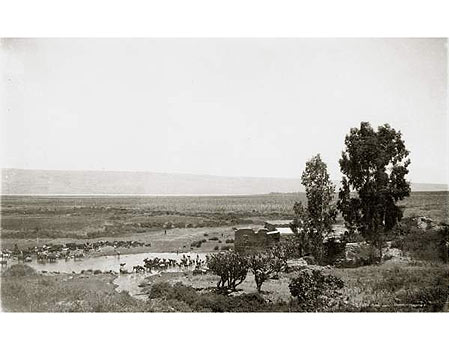
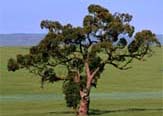 Eucalyptus Tree 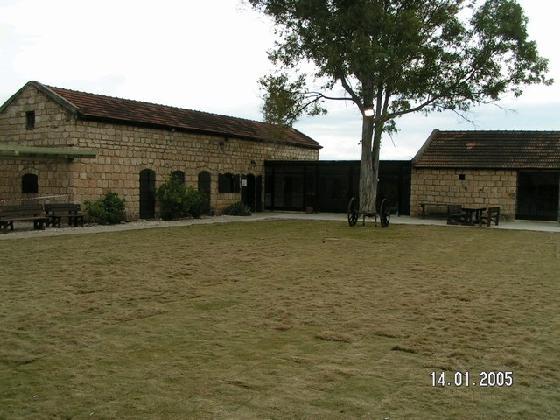 Dubrovin Farm | Eventually, Baron Rothschild
provided eucalyptus trees to the settlers to plant in the valley because of the trees ability to absorb large amounts of water. The settlers eventually tamed the land, and farmsteads such as the Dubrovin farm became successful ventures in the area (Aisenburg, 2008). |
Malaria in the valley
"During the 1930s it was estimated that 70% of local adults were infected with malaria, and in some villages few, if any, children lived beyond the age of two. Only the constant influx of refugees and new settlers ensured that the human population did not disappear altogether" (Gutman, 2001).
"When European Jews came to settle the land of Israel, they found more mosquitoes than milk and honey. With Arabs settled primarily in the mountains, Jews were settling the coastal plains, the swampy stretch from Haifa to Gedera, and hundreds of pioneers, as well as soldiers in Gen. Allenby's army, died of the disease" (Steinberg, 2004).
After 1940, malaria began to be suppressed after irrigation canals were rid of vegetation, kerosene was put in the water, and better health care came to the area. When DDT was introduced in 1945, malaria became almost non-existent (Gutman, 2001).
 | The Hula National Reserve |
Why is malaria found in the Hula?
The Hula Valley has a Mediterranean climate. The summers are hot and dry, while the winters are cool and rainy. The valley is also enclosed by mountains, which creates even more extremes in the seasons and temperatures as compared to the Mediterranean coast in Israel. Annually, the south part of the valley gets about 16 inches of rain, while the north part of the valley can get as much as 31 inches. The Herman mountains to the north of the valley receive ample precipitation, mostly as snow, and can get more than 59 inches of precipitation per year. The underground springs are fed by this precipitation, which then feed the Jordan river and its sources. This abundant amount of water flows south into the valley. Mosquitoes like the abundant, still water that gathers in the valley, where they can lay their eggs. Because of the positive conditions for the Anopheles mosquito, malaria parasites can also flourish in the area, which then causes malaria epidemics in the Hula Valley (Zohary, 2010).
Draining the Swamp
Efforts to control and regulate the Hula Valley swamp date back to Roman times. The Ghawarma attempted to drain the swamps in the late 1800s by enlarging the outlet of the Jordan River and by also digging drainage canals (Zohary, 2010). The Ottomans and British implemented various projects to drain the Hula Valley and develop the land (Gutman, 2001). Then, in 1951, the Jewish National Fund began an 8 year program to drain the valley (Winter, 1999). This program included deepening and straightening the bed of the Jordan river, and using a dam to maintain the water level at the outlet of Lake Hula, and also digging the Eastern and Western canals that then formed the Central Canal (Gutman, 2001). The swamp and lake dried out by the summer of 1958, with only a small part of the area left as a nature reserve. Settlers in the area planted maize in the old lake bed in the summer of 1958, and they received an abundant harvest without the use of fertilization. But later farming successes decreased through the years because of frequent flooding that began to reclaim the land (Gutman, 2001).
Click HERE for an interactive map of Israel
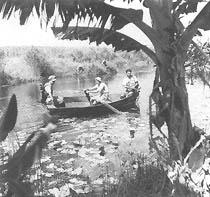 | 1930s in Hula 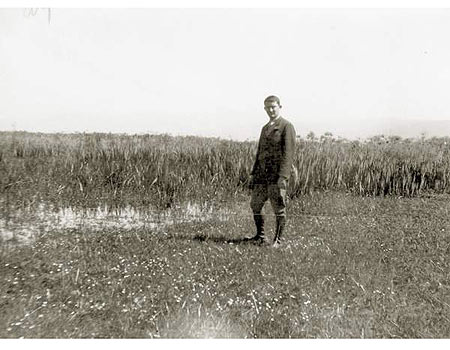 |
The Impact of Draining
At the time the valley was drained, the young state of Israel needed more arable land to farm to provide food, and also needed a way to eliminate the threat of malaria for good. The draining project removed 12,355 acres of Anopheles habitat, reducing the threat of the disease (Zohary, 2010).
But after draining the valley for agricultural use, the inhabitants, scientists and the Israeli government realized the need to balance the presence of the ecosystem with using the land for agriculture. The draining of the swamp did rid the area of malaria, but the ecosystem, important as a feeding and nesting site for migratory birds, began to disappear. Fewer migratory birds were found in the area, and other animals also began disappearing from the area, while animals and plants not normally found in high numbers in the valley, began to invade. Pesticides and fertilizers also began to seep into the water, including the Sea of Galilee, the largest source of drinking water in Israel. Other sections of water in the area were threatened by over-use and began to dry up (Gutman, 2001).
Eventually part of the region was reflooded "in an attempt to prevent further soil deterioration and to revive [the] ecosystem" (Gutman, 2001). The Hula Restoration Project created new pools, and connected a network of channels for drainage. The water level and quality also began to be monitored. In 1964, the area became the first protected reserve in Israel, the Hula Nature Reserve, and was then opened to tourists in 1978 (Winter, 1999).
In 1994, part of the valley was again reflooded, and eventually Lake Agmon, as well as reservoirs and fishponds were created (IME, 2004). The Hula Restoration Project seeks to maintain "a high water table and year-round green on the peat soils in order to slow down the decomposition and subsidence processes," as well as reduce the amount of pollutants that reach the Sea of Galilee/Lake Kinneret from the Hula Valley and the peat soils (Zohary, 2010).

Bird migration from Europe to Africa Over 500 million birds cross over Israel each year during the autumn and spring migrations over the Syrian-African Rift Valley. Tens of thousands of these birds are wintering wetland birds and a large portion of these fowl stop in the wetlands of the Hula Valley during the autumn migration between September and November. The wintering birds of the Hula include waterfowl, raptors, and waders. Many endangered species such as Common Cranes, Imperial and Greater Spotted Eagles, Pygmy Cormorants, Black Storks, raptors, pelicans, ducks, geese also stop in the valley. The eucalyptus groves, many of which were planted in earlier efforts to dry the valley and thus reduce the incidence of malaria, are important roosting sites for Imperial Eagles and Greater Spotted Eagles (Israel Ministry of the Environment, 2004). |  Satellite image of the Sinai Peninsula, part of the Syrian-African Rift Valley 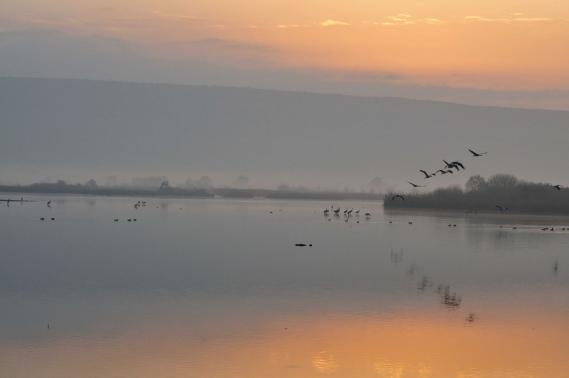 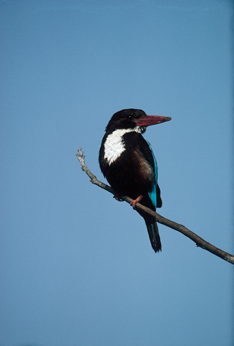 White-breasted Kingfisher Click HERE for a video about bird migration in Israel by FOX News 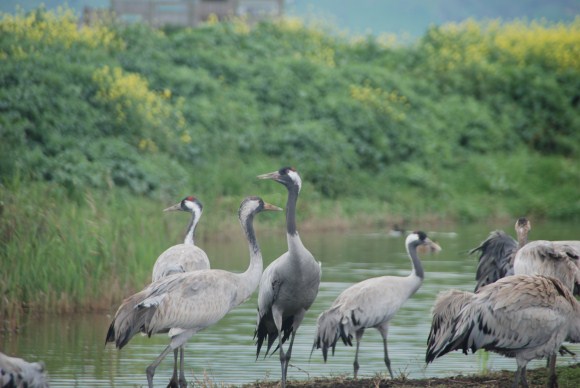 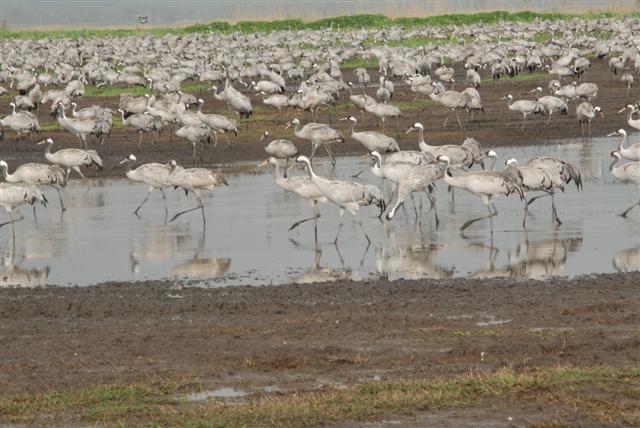 |
The Hula Valley Today
Today, farmers still use the land to grow crops. But they have discovered that crop rotation works best in the peat soil. Farmers are able to grow crops such as peanuts, corn, sunflowers, wheat, potatoes, and celery. The best form of irrigation seems to be the use of irrigation lines, which prevent flooding and peat combustion. The irrigation lines also provide enough water to drown the high numbers of field mice. The Agmon lake, an artificial lake in the valley, was created on land that no supported agriculture. Bulldozers were able to dig out the peat soil, and then water from the Jordan River filled in the hollow. The cost of this project to Israel came to about $15 million (Carmel, 1996).
Is malaria a problem in Israel today?
By the 1940s, malaria had almost been annihilated in the Hula Valley through the use of DDT and chlorophyll that kills mosquitoes (Steinberg, 2004). After the draining of the swamp, there were even fewer malaria cases in the area. Today, travelers to Israel and the Hula Valley are not recommended to take anti-malarial drugs since malaria has been eradicated in Israel.
Click Here for information about touring Israel.
Click HERE to view different birds and animals in the Hula Valley.
